- RoverLead
- Posts
- AI Champions in Operations
AI Champions in Operations
How to Pick Them, Train Them, and Support Them

Jean-Michel Van
February 15, 2026

Hello AI Builders,
Your problem probably isn't that people don't want AI to work. It's that you're asking them to adopt it without a clear owner, support system, or permission to make it their job.
Most companies roll out AI tools and expect everyone to figure it out on their own, while still hitting their quarterly numbers and managing their actual workload.
The result? A few power users quietly carry the load, most people revert to old habits, and adoption stalls out at 20%.
This article breaks down how to identify, train, and support AI champions in your operations team, the people who will actually embed AI into daily work and bring everyone else along without requiring you to hire a change management consultant.
If you're tired of watching AI initiatives lose steam after the pilot phase, this is for you.
🤝 Brought to you by:
Here’s how I use Attio to run my day.
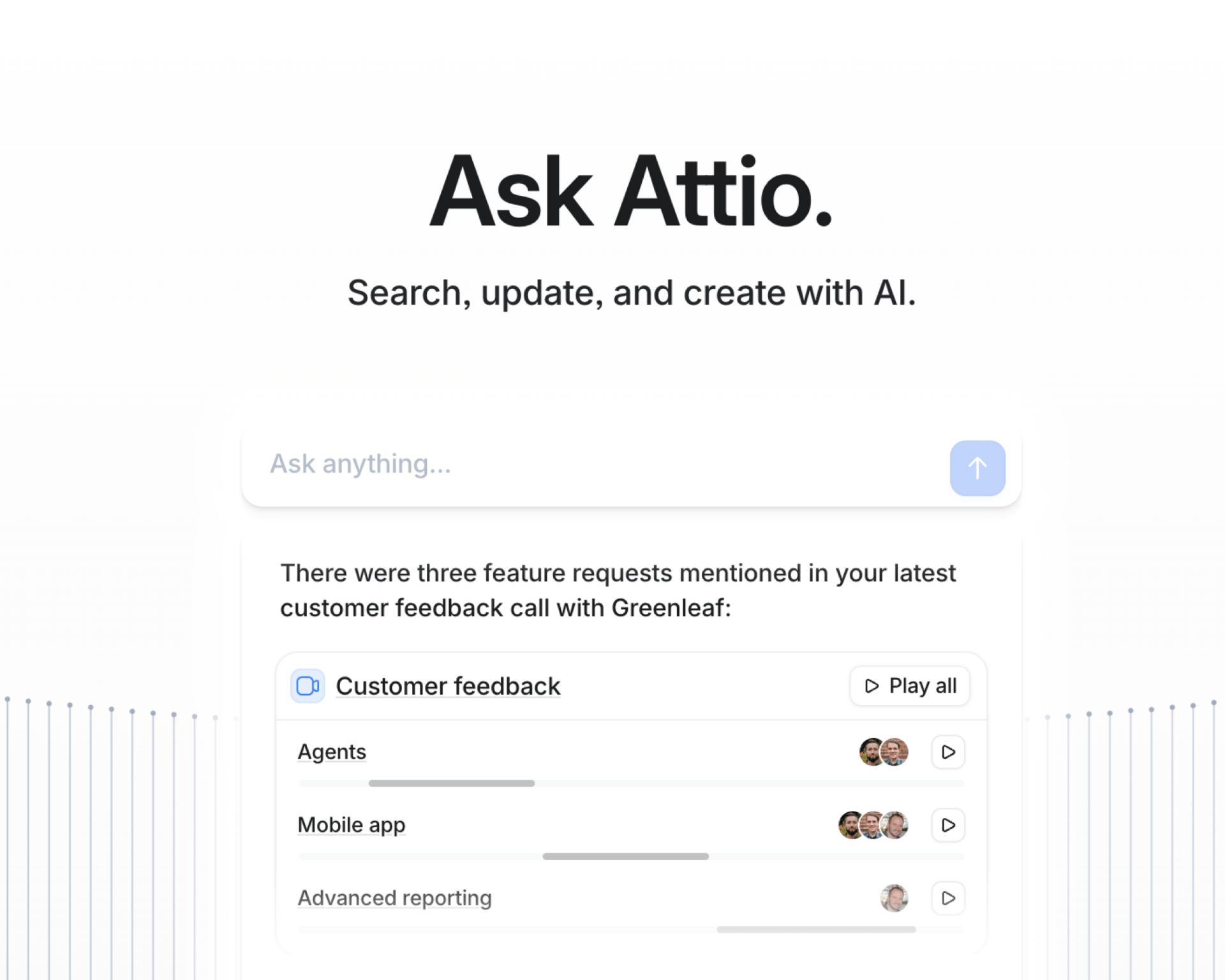
Attio is the AI CRM with conversational AI built directly into your workspace. Every morning, Ask Attio handles my prep:
Surfaces insights from calls and conversations across my entire CRM
Update records and create tasks without manual entry
Answers questions about deals, accounts, and customer signals that used to take hours to find
All in seconds. No searching, no switching tabs, no manual updates.
Ready to scale faster?
Weekly finds
📰 AI Insight
Anthropic's Opus 4.6 vs OpenAI's GPT 5.3 Codex. Both companies dropped their flagship models on the same day in February. Either this is coordinated product strategy or Silicon Valley's pettiest rivalry yet.
AI Agents Now Hiring Humans for Tasks. "Rentahuman" lets AI agents post gigs for actual people to complete. We've officially closed the loop: AI automating work by delegating it back to humans.
Plot Twist: AI Making You Work More Despite all the productivity promises, workers report AI is increasing their workload, not reducing it. Turns out "efficiency" just means you have time for more meetings.
DeepSeek Fixed What Breaks $100M Training Runs. DeepSeek solved a critical failure mode in massive AI training runs. This matters if you're spending eight figures on GPUs and hoping they don't crash halfway through.
Apple Plots Smart Home Takeover with Four AI Devices Desktop robot, smart display, security cameras, all launching 2026-2027. Apple's finally entering the "put a microphone in every room" market.
THE ISSUE
Why AI Adoption Quietly Stalls
You bought the tools. You ran the training sessions. You even got a few early wins.
But six months later, adoption is stuck at 15-20% of your team, the same three people are doing all the work, and everyone else has quietly gone back to the old way of doing things.
Maybe they're too busy. Maybe the tool doesn't quite fit their workflow. Maybe they tried it once, hit a snag, and decided it wasn't worth the hassle.
The truth? AI adoption doesn't fail because the technology isn't ready. It fails because you're treating it like software rollout instead of operational change.
This is why most AI initiatives don't scale beyond the pilot. They're missing the human infrastructure that makes adoption stick.
What AI Champions Really Are (and Aren't)
AI champions aren't evangelists who preach the AI gospel in Slack channels. They're practitioners who embed AI into real workflows, troubleshoot when things break, and bring their peers along without making it feel like extra work.
Here's what they actually do:
They translate tools into workflows. Taking a generic AI capability and figuring out exactly how it fits into lead routing, order processing, or customer onboarding.
They surface friction points early. When the AI summary misses key context or the automation breaks on edge cases, they catch it before it becomes a team-wide problem.
They create social proof. When your best ops manager starts using AI to close tickets faster, everyone else pays attention in a way no training deck ever will.
They reduce the learning tax. Instead of forcing everyone to become AI experts, champions absorb the complexity and make adoption feel simple for their peers.
This isn't about finding the most technical person on your team. It's about finding the people who already solve operational problems and giving them AI as another tool in their kit.
How to Pick the Right AI Champions (Without Picking Wrong)
Most companies choose champions based on enthusiasm or seniority. This is how you end up with a VP who doesn't use the tools daily or a junior analyst who lacks the credibility to change team behavior.
Here's what actually works:
1. Look for Natural Problem Solvers
Your best champions are already improvising workarounds, building spreadsheets to track what the system doesn't, and helping teammates debug issues without being asked.
These are the people who don't wait for IT to fix something. They figure it out and share the solution.
2. Prioritize Workflow Fluency Over Technical Skill
Champions need to understand how work really flows, the handoffs, the exceptions, the unwritten rules. Technical aptitude can be trained. Operational intuition can't.
Ask: Who do people go to when a process breaks? That's your champion.
3. Find People With Peer Credibility
If someone's peers don't respect their judgment on operational decisions, they won't follow their lead on AI adoption. Credibility matters more than title.
Look for people whose Slack messages get responses, whose input shifts team decisions, and whose workflows others quietly copy.
4. Choose People With Capacity (or Create It)
This is the part most companies skip. You can't ask someone to champion AI adoption on top of a full workload and expect it to work.
Good enough is 10-20% of their time. That might mean backfilling part of their role, reassigning projects, or acknowledging that AI adoption is part of their job now, not a side quest.
5. Avoid the "AI Enthusiast" Trap
The person who's most excited about AI in your all-hands meeting is often the wrong choice. Enthusiasm without operational grounding leads to pilots that don't translate to production.
You want practitioners who see AI as a tool to remove friction, not futurists who want to "transform everything."
How to Train AI Champions Without Turning It Into a Certification Program
Most AI training programs fail because they're designed like academic courses: lots of theory, generic examples, and no connection to the actual work champions need to do next week.
Here's what works better:
1. Start With Real Workflows, Not Tutorials
Don't teach them "how to prompt ChatGPT." Teach them how to use AI to route support tickets, summarize customer calls, or clean CRM data, the specific tasks they already own.
Training should feel like upgrading their existing toolkit, not learning a new discipline.
2. Train in Cohorts, Not Individuals
When champions train together, they develop shared language, troubleshoot in real-time, and build momentum as a group. Solo training leads to isolated champions who burn out.
Cohorts also create accountability. If three people commit to embedding AI into their workflows, they'll push each other further than any one person would go alone.
3. Focus on Troubleshooting Over Best Practices
The real learning happens when something breaks. Train champions to debug common failure modes: when the AI hallucinates, when the automation skips a step, when the data pipeline doesn't sync.
Champions who can fix things build trust. Champions who can only follow happy-path examples don't.
4. Make "Teach One, Document One" Part of the Job
Every time a champion solves a new AI workflow problem, they should teach one peer and document one process. This creates compounding adoption without requiring you to scale formal training.
It also forces champions to clarify their own thinking, which accelerates their mastery.
5. Keep Training Loops Short
One week, not one quarter. Each cycle: teach a capability, apply it to real work, troubleshoot what broke, share what worked.
Long training programs lose urgency. Short loops create momentum.